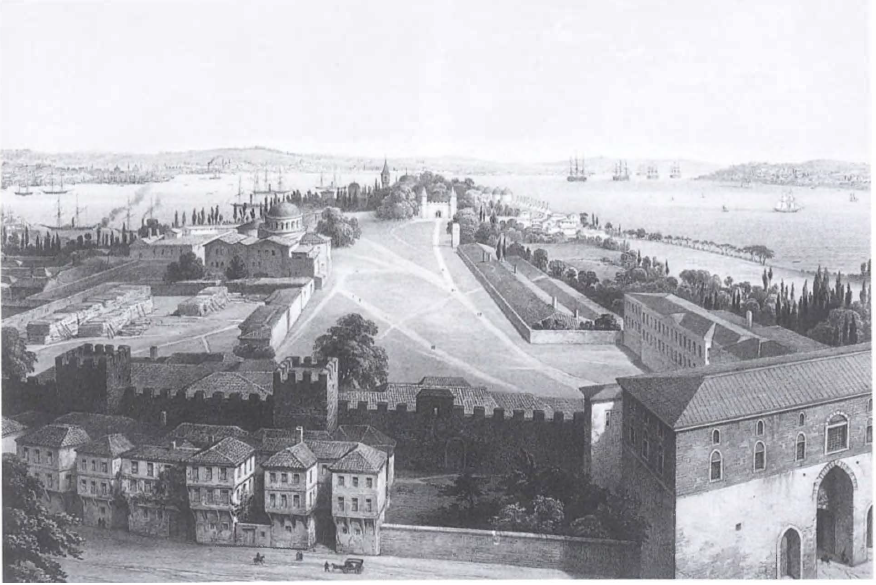

Bab-ı Hümayun
Located in the historic peninsula of Istanbul, directly opposite Hagia Sophia, Bab-ı Hümayun is the main entrance gate of Topkapı Palace. As the principal gateway to the palace complex that served as the administrative center of the Ottoman Empire for nearly four centuries, Bab-ı Hümayun was much more than an architectural entrance. It was also a symbol of Ottoman imperial power, prestige, and political authority. The name Bab-ı Hümayun is derived from Arabic and Persian words and means "Imperial Gate" or "Sovereign's Gate." Passing through this monumental entrance, visitors reach the First Courtyard of Topkapı Palace. From there, the Babüsselam, also known as the Middle Gate, provides access to the Second Courtyard. One of the most remarkable features of Bab-ı Hümayun is its location directly opposite Hagia Sophia. These two monuments stand as powerful reminders of Istanbul's two great imperial periods: the Byzantine and the Ottoman. From the Byzantine Period to the Ottoman Empire: The Legacy of the Chalke Gate The area surrounding Bab-ı Hümayun was already an important imperial center during the Byzantine period. Before the Ottoman conquest of Constantinople in 1453, one of the significant entrances to the Byzantine Great Palace stood in this area. Known as the Chalke Gate (Halki), this structure was also referred to in Western sources as the "Brazen House" because of its gilded bronze coverings. Located near the Church of Christ, the Chalke Gate was a two-story rectangular structure consisting of a central domed section and vaulted rooms on either side. It was one of the ceremonial entrances associated with the Byzantine imperial palace and reflected the magnificence of the Byzantine emperors. The location of Bab-ı Hümayun, in the same historical axis as the former Chalke Gate, is particularly significant. Its position directly opposite Hagia Sophia meant that it stood slightly outside the main central axis of the First Courtyard. Nevertheless, its architectural and historical relationship with the former Byzantine palace entrance is noteworthy. By constructing the magnificent entrance to their imperial palace in this historically significant location, the Ottomans announced the beginning of a new political era in Constantinople. The area that had once been associated with the Byzantine imperial center now became the gateway to the palace of the Ottoman sultans. In this respect, Bab-ı Hümayun is not simply the entrance to Topkapı Palace; it is also an architectural expression of the transition from the Byzantine to the Ottoman Empire. Architectural Features of Bab-ı Hümayun The original architectural appearance of Bab-ı Hümayun is believed to have been considerably more elaborate than the structure visitors see today. Historical documents and architectural studies based on the existing ground-floor structure suggest that the gate once had two stories and a more impressive architectural appearance. According to architectural reconstructions, the upper floor consisted of a central room covered by a gilded dome, with two additional rooms on either side. In front of this section was an open portico protected by wide projecting eaves, opening toward the First Courtyard. The exterior façade facing Hagia Sophia featured a particularly interesting arrangement of windows. Above the arched entrance stood a large central window, while three smaller windows were arranged in two rows on each side. The large central window was especially significant. In traditional palace architecture, such windows were often designed to allow the ruler to appear before the public. They symbolized the authority and presence of the sovereign. It is therefore believed that the large central window of Bab-ı Hümayun may also have served as a place from which the sultan could appear before the people. The original appearance of the building recalled ceremonial entrances and viewing pavilions crowned with golden domes, examples of which could be found in Abbasid Baghdad and Byzantine Constantinople. Although the upper floor and its original architectural appearance have not survived, historical documents and architectural research help us understand how magnificent Bab-ı Hümayun once was. The Opening of Bab-ı Hümayun to the Public During the Reign of Bayezid II One of the important changes in the history of Bab-ı Hümayun took place during the reign of Bayezid II. A historical account from the period describes the changing use of the gate with the following words: "Formerly, there used to be guards at the First Gate mentioned above, but now everyone enters here on horseback." This statement is significant because it indicates that Bab-ı Hümayun gradually became accessible to a wider section of society beginning during the reign of Bayezid II. Previously controlled by guards and used to protect the palace, the gate increasingly became a more accessible passageway. The fact that people could enter the First Courtyard on horseback suggests that this courtyard had a more public character than the inner sections of the palace. However, this did not mean that the entire palace was open to the public. While the First Courtyard was relatively accessible, the Second Courtyard, reached through the Babüsselam Gate, and the inner sections of the palace remained subject to stricter security and ceremonial protocols. Thus, Bab-ı Hümayun served both as a security entrance and as the main connection between the Ottoman palace and the outside world. Bab-ı Hümayun as a Treasury During the Reign of Selim I Another fascinating aspect of the history of Bab-ı Hümayun is its possible use as a treasury. The building is believed to have served as a treasury during the reign of Selim I, also known as Selim the Grim or Yavuz Sultan Selim. During this period, political and economic tensions between the Ottoman Empire and Safavid Persia also affected the silk trade. Following the imposition of an embargo on silk trade with Persia, Selim I confiscated silk textiles belonging to Persian merchants. According to the historical account, these valuable textiles were subsequently stored in the treasury at Bab-ı Hümayun. The story continued during the reign of his son, Suleiman the Magnificent. Suleiman returned the silk textiles confiscated by his father to their original owners, presenting this decision as an example of his commitment to justice. This historical episode demonstrates that Bab-ı Hümayun was not merely an entrance used to control access to the palace. It was also associated with the storage of valuable goods and the economic policies of the Ottoman state. Furthermore, the incident offers an interesting insight into the different approaches to governance during the reigns of Selim I and Suleiman the Magnificent. Bab-ı Hümayun During the Reign of Suleiman the Magnificent During the reign of Suleiman the Magnificent, Bab-ı Hümayun was also associated with certain administrative and legal practices of the Ottoman palace. Lütfi Pasha, one of Suleiman's grand viziers who served between 1539 and 1541, claimed in his writings that he was the person who introduced the practice of keeping the estates of individuals who died without heirs at Bab-ı Hümayun for a period of seven years. This detail demonstrates that Bab-ı Hümayun was not exclusively a ceremonial or architectural structure. It was also connected with certain administrative and legal practices of the Ottoman state. In the Ottoman palace system, government administration, the safekeeping of valuable objects, official ceremonies, and palace security were closely interconnected. Bab-ı Hümayun formed an important part of this complex administrative system. Bab-ı Hümayun and Ottoman State Ceremonies Bab-ı Hümayun was not simply the everyday entrance to Topkapı Palace; it also played an important role in Ottoman state ceremonies. The sultan's departures from the palace, the entrance of government officials, and important official visits all contributed to the historical significance of this monumental gate. Its impressive architecture was intended to communicate the power of the Ottoman ruler and the grandeur of the empire to those entering the palace. Passing through Bab-ı Hümayun, visitors reached the First Courtyard, which functioned as the outer service area of the palace. Various service facilities and palace buildings were located here. At the far end of the courtyard stood the Babüsselam, which provided access to the more restricted sections of the palace. For this reason, Bab-ı Hümayun represented the first major boundary between the outside world and the inner world of the Ottoman palace. The Historical and Symbolic Significance of Bab-ı Hümayun One of the most remarkable features of Bab-ı Hümayun is its location at the intersection of the historical legacies of the Byzantine and Ottoman Empires. On one side stands Hagia Sophia, with its history spanning approximately fifteen centuries. On the other stands the magnificent entrance to Topkapı Palace, the administrative center of the Ottoman Empire. Together, these monuments represent different imperial periods, political transformations, and cultural developments in Istanbul. When you pass through Bab-ı Hümayun and enter the First Courtyard, you are not simply stepping into the garden of a palace. You are entering a historical world shaped by Ottoman administration, imperial ceremonies, and centuries of palace life. Conclusion: The Gateway to Two Great Empires Bab-ı Hümayun holds an important place in the architectural composition of Topkapı Palace, but its significance extends far beyond its physical structure. It is a symbolic monument that reflects the historical continuity of Istanbul. Built in the historic surroundings of the former Byzantine Chalke Gate, this Ottoman imperial entrance represents the profound political and cultural transformation that took place in Constantinople. Its changing role throughout history is particularly fascinating: becoming more accessible to the public during the reign of Bayezid II, possibly serving as a treasury during the reign of Selim I, and being associated with administrative and legal practices during the reign of Suleiman the Magnificent. Today, visible to everyone visiting Hagia Sophia and the historic peninsula, Bab-ı Hümayun remains an essential monument for understanding Istanbul's fascinating journey from the Byzantine Empire to the Ottoman Empire.
Last Modification : 11/12/2026 4:09:23 PM