The Epic Story of the 57th Regiment
One of the brightest pages in Turkish military history is the story of the 57th Infantry Regiment, an unparalleled example of sacrifice and heroism in the defense of the homeland. This regiment, particularly through its extraordinary resistance during the Gallipoli Campaign, has been etched into the memory of the Turkish nation as "the regiment that marched to death." The epic of the 57th Regiment is not merely a military success but also a symbol of a nation's struggle for existence.
Historical Background and Establishment of the Regiment
The roots of the 57th Infantry Regiment date back to the late 19th century, around 1880 or 1892. However, the regiment's formation that would go on to write its legend at Gallipoli took place shortly before the outbreak of World War I, on February 1, 1915, in Tekirdağ. Re-established as part of the 19th Division, the regiment received its banner on February 22, 1915, and its command was given to Major Hüseyin Avni Bey, an experienced officer who had previously served in the Balkan Wars. The commander of the 19th Division was Lieutenant Colonel Mustafa Kemal, who would later become the founder of the Republic of Turkey.
The regiment was dispatched to Gallipoli and stationed near the village of Bigalı on March 26, 1915, where it continued its training and preparations until the major landing on April 25. During this period, the regiment's strength consisted of 49 officers and 3,638 enlisted men, equipped with 2,288 rifles and four machine guns.
April 25, 1915: The Beginning of the Epic
On the morning of April 25, 1915, the Gallipoli land battles began when Allied forces landed on the shores of Arıburnu (Anzac Cove). The enemy's primary objective was to seize the dominant heights of the Gallipoli Peninsula and bring the Dardanelles Strait under their control. Upon receiving the first contact reports from the Turkish units in the region, Mustafa Kemal grasped the gravity of the situation and immediately ordered the 57th Regiment into action.
After personally observing the advance of enemy troops at Conkbayırı (Chunuk Bair), Mustafa Kemal gave his historic order to the 57th Regiment. This command, which has gone down in military literature as "I do not order you to attack; I order you to die!" is one of the most striking expressions of determination in the defense of the homeland. In the continuation of his order, Mustafa Kemal added, "During the time that passes until we die, other forces and commanders may take our place," emphasizing the strategic importance of this sacrifice. This order meant that the regiment would not merely defend but launch a desperate counterattack to stop the enemy at all costs.
The regiment's commander, Hüseyin Avni Bey, implemented the order without hesitation and launched a counterattack with his troops around 11:30 a.m. This assault was directed against the ANZAC forces attempting to capture the critical hills around Conkbayırı. The heroic soldiers of the 57th Regiment displayed incredible resistance against numerically superior and well-equipped enemy forces. By the end of that first day, despite suffering heavy casualties, the regiment prevented the collapse of the Arıburnu Front and laid the first and most solid foundation of the Turkish defense.
The Regiment's Commander Hüseyin Avni Bey and Casualties
The success of the 57th Regiment in these initial battles became synonymous with the courage and determination of its commander, Hüseyin Avni Bey. Mustafa Kemal described him in his war reports as "a commander of very good heart, reliable, and highly respected," and while praising the success of the 57th Regiment, he noted that it was Hüseyin Avni Bey who laid the first and solid foundation of this victory.
This heroic commander was martyred on August 13, 1915, when an artillery shell struck the regiment's headquarters. That day was the second day of Ramadan Bayram (Eid al-Fitr). Hüseyin Avni Bey's final words were, "Let my family be informed, may my nation live!" The news of his death deeply shook Mustafa Kemal, and a memorial tomb has been erected at the site where his body was found.
The casualties suffered by the 57th Regiment demonstrate just how bloody the conflict was. In the initial battles alone, between April 25 and May 3, 1915, the regiment lost more than half of its strength. Throughout the entire Gallipoli Campaign, of the initial 49 officers and 3,638 enlisted men, 25 officers and 1,817 soldiers were martyred. This represents a loss rate of 61.7%, nearly double the overall casualty rate of the Ottoman army. These heavy losses are the primary reason the 57th Regiment is remembered as the "regiment of martyrs." Mustafa Kemal's words about the regiment, "This is the famous regiment, because it was completely annihilated," express this reality in its plainest terms.
Keeping the Memory Alive and Its Legacy
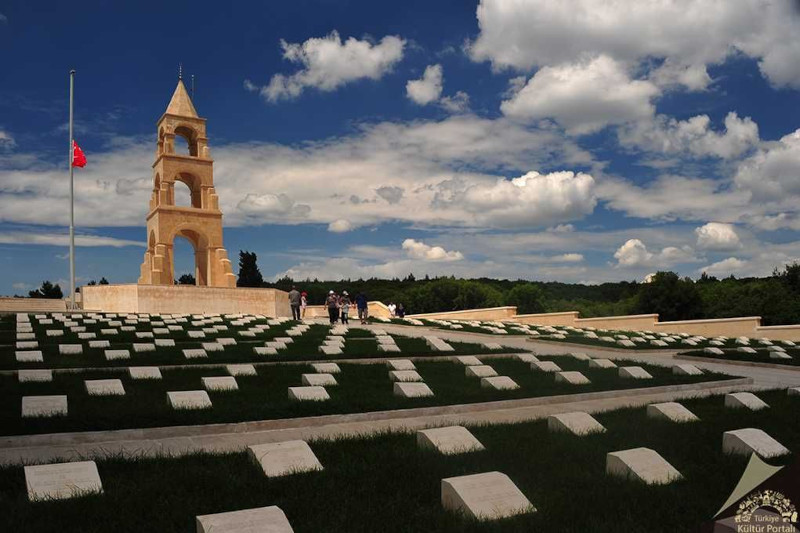
Today, on the Gallipoli Peninsula, the 57th Infantry Regiment Memorial and Cemetery stands to commemorate the heroism and martyrs of the regiment. Opened to visitors in 1992, this memorial complex features reliefs depicting the regiment's counterattack, plaques bearing the names of the fallen, and symbolic graves, offering visitors deeply moving experiences. The memorial also includes the names of the regiment's Greek-born doctor, Captain Dimitroyati, and its imam, Hasan Fehmi. Every year on April 25, the "57th Regiment Loyalty March" is held with the participation of thousands, once again honoring these heroes.
The story of the 57th Regiment, as one of the most important building blocks of the Gallipoli victory, is known and respected not only in Turkey but around the world. Their sacrifice symbolizes the price of defending one's homeland and a nation's love of independence in a universal epic of heroism. The 57th Regiment stood at the forefront of writing the epic that "Gallipoli is Impassable" and inscribed its name in golden letters in the hearts of the Turkish nation.
Son Güncellenme : 01/09/2026 12:05:48