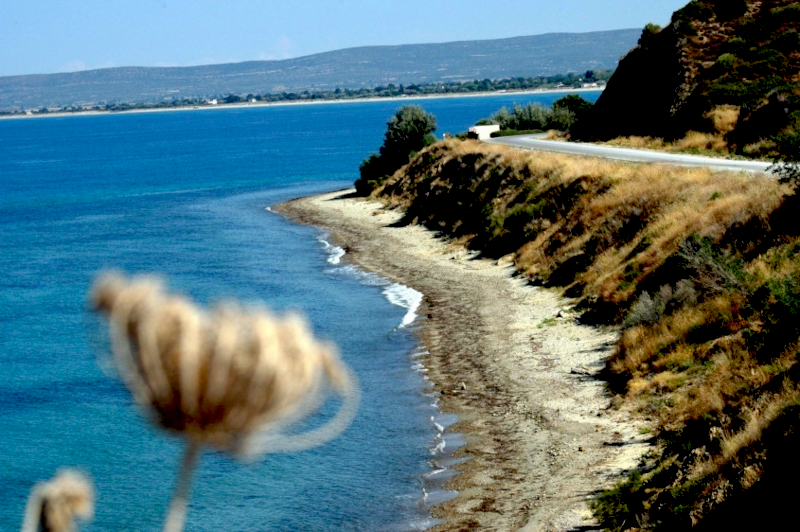
Anzac Cove
The land battles of the Gallipoli Campaign began on the morning of April 25, 1915, on a quiet beach on the western coast of the Gallipoli Peninsula. From that day forward, this place would go down in world history as "Anzac Cove" and become the starting point of an epic that would profoundly shape the national identities of two nations.
A Name and the Story of a Plan
The name ANZAC is an acronym for "Australian and New Zealand Army Corps." It was coined at the corps' headquarters in Egypt for coding purposes and quickly became the official designation of the entire unit. The cove where the landing took place was later named "Anzac Cove" upon the suggestion of the corps commander, General William Birdwood. The Republic of Turkey officially recognized this name on Anzac Day, April 25, 1985.
Strategic Misjudgments and a Surprise Landing
The strategic objective of the landing was to support the main landing at Cape Helles and to outflank the Ottoman defensive line from the rear. The initial goal of the Anzac Corps was to capture the dominant Chunuk Bair‑Hill 971 ridge, thereby cutting off possible Ottoman reinforcements from the north and facilitating the advance to the south. The success of the plan depended on a swift and surprise assault.
However, the greatest advantage of this plan was that the Turkish side did not expect a landing at this point. The German commander at the head of the Ottoman army, Marshal Otto Liman von Sanders, believed that the real major landing would take place at Suvla Bay. Consequently, he regarded any landings in the southern areas, such as Anzac Cove, as diversionary (fake) operations designed to conceal the main offensive. This strategic miscalculation led to weak Turkish defences in the region and meant that the initial resistance the Anzac soldiers encountered was lighter than expected.
Had the Turkish high command known in advance that a real landing would be made at Anzac Cove, they would have strongly fortified the hilly terrain that dominated the beach—the very terrain that would later become the Anzacs' greatest advantage. They could even have eliminated the defensive possibilities offered by that area. However, Von Sanders' misjudgement gave the Anzac troops the opportunity to hold onto this elevated ground, which provided them with a natural shelter as soon as they came ashore.
A Wrong Turn in the Dark: The Beginning of the Landing
On the morning of April 25, 1915, around 4:30 AM, the first wave of 1,500 Australian soldiers headed for the shore under the cover of warships. Due to the current and darkness, they landed at Arıburnu Beach, approximately 1.6 kilometres north of the planned landing zone at Kabatepe. This area was surrounded by steep and rugged cliffs, at the foot of a terrain that was much more favourable for defence. This navigational error fundamentally altered the course of the operation.
Facing them was only one battalion of the 27th Regiment, under the command of Colonel Mehmet Şefik Bey. This battalion was scattered along a 12‑kilometre stretch of coastline and was vastly outnumbered. However, the resistance proved to be unexpectedly fierce for the Anzacs. The small Turkish detachments on the shore fought heroically against the numerically superior enemy, buying vital time for the main defence units to mobilise.
At the moment of landing, the Australian and New Zealand soldiers realised with bitter clarity that the designated landing area they had been shown was far from favourable. As soon as they set foot on Anzac Cove, they understood the harsh reality: steep cliffs, a narrow beach, and high hills awaited them. Instead of the flat, easily traversable coastline they had expected, they found themselves in a narrow, almost trap‑like inlet that promised a gruelling struggle ahead.
Mustafa Kemal and the 57th Regiment: The Turning Point of the Battle
The news of the landing reached Lieutenant Colonel Mustafa Kemal, commander of the 19th Division, who was stationed in the village of Bigalı. Grasping the gravity of the situation, Mustafa Kemal made the decision to dispatch his 57th Regiment to Chunuk Bair without waiting for orders from his superiors. This decision proved to be one of the most critical moves that altered the course of the war.
When Mustafa Kemal arrived at Chunuk Bair, he encountered retreating Turkish soldiers abandoning their positions. In that moment, which would become legendary, he called out to the troops:
- "Why are you fleeing?"
- "Sir, the enemy!"
- "Where?"
- "There!"
When they replied, "We have no ammunition left," Mustafa Kemal's order was unequivocal: "If you have no ammunition, you have your bayonets. Fix bayonets and lie down!" At this command, the Turkish soldiers threw themselves to the ground and took positions, while the Anzac unit facing them also dropped to the ground at the same instant. The few minutes thus gained were enough for the 57th Regiment to reach their positions.
Mustafa Kemal once again etched his name into history with the order he gave to the 57th Regiment: "I do not order you to attack; I order you to die." Following this command, the 57th Regiment stopped the Anzac advance on the slopes of Chunuk Bair and forced them to retreat. This moment was a turning point, not only in Mustafa Kemal's career but also in the fate of the Gallipoli Campaign. Had Chunuk Bair fallen, the Turkish defensive system could have collapsed, and the outcome of the war might have been very different.
The Anzac landing failed to achieve its military objectives. The planned rapid advance never materialised, and the operation degenerated into eight months of bloody trench warfare. Both sides suffered heavy losses. Yet what happened at Anzac Cove took on a significance far beyond the battle itself.
For Australia and New Zealand, this unsuccessful campaign evolved into a "founding myth" that shaped the identities of both nations. Every year on April 25, Anzac Day is observed as the most important day of national mourning and pride, commemorating their forebears who gave their lives on these shores. The quiet cove on the Gallipoli Peninsula, far more than just a battlefield, endures as one of the most poignant symbols of peace and remembrance in human history.
Last Modification : 9/21/2026 2:02:22 PM