
An Unforgettable One-Day Itinerary in Gallipoli
The Gallipoli Peninsula is not merely a destination; it is a sacred landscape where history whispers from every ridge, cove, and trench. For those who wish to walk in the footsteps of soldiers, commemorate heroism, and witness one of the most significant battlefields of the 20th century, a day trip from Istanbul to Gallipoli offers an intense and profoundly moving experience. If you are planning this journey, careful timing is essential. This comprehensive guide will take you through an ideal one-day route, beginning at dawn in Istanbul and ending with a sunset return, enriched with historical insights and practical tips.
Early Morning Departure from Istanbul
Any successful Gallipoli day trip must start before the city awakens. We strongly recommend departing from Istanbul at 6:00 AM sharp. This early start is not merely a suggestion—it is a necessity. The drive from Istanbul to the Gallipoli Peninsula covers approximately 300 kilometers, and traffic around the city's outskirts can be unpredictable. Leaving at dawn ensures you avoid the notorious congestion of the TEM highway and arrive at the battlefields with ample daylight. The morning air is crisp, the roads are quiet, and the sense of anticipation builds as you leave the urban sprawl behind, crossing the bridges that connect Europe to Asia and heading west toward Thrace.
First Break: Tekirdağ Breakfast Stop
After about two hours of smooth driving, you will reach the coastal city of Tekirdağ, an ideal spot for a refreshing break. Tekirdağ is famous for its hearty breakfast culture, and there is no better way to fuel up for the day than with a traditional kaşarlı tost—a grilled cheese sandwich made with local white cheese—accompanied by a steaming glass of Turkish tea. Many roadside cafes offer panoramic views of the Sea of Marmara, allowing you to stretch your legs and enjoy the sea breeze. This 30-minute stop is not just about food; it is a moment to transition from the modern world into the historical mindset. As you sip your tea, you might glance at the horizon and imagine the countless soldiers who once traveled these same roads toward their destiny.
Arrival at the Gallipoli Peninsula
Resuming your journey, another two-hour drive brings you to the heart of the Gallipoli Peninsula. By approximately 10:30 AM, you will arrive at the first significant historical site. The landscape here is deceptively peaceful—rolling hills covered in pine forests and wildflowers, with the sparkling blue waters of the Dardanelles Strait below. Yet beneath this serene surface lies a violent past. The Gallipoli Campaign, also known as the Çanakkale Battles, took place between April 1915 and January 1916, pitting Ottoman forces against Allied troops from Britain, France, Australia, and New Zealand. Over 100,000 men lost their lives on this narrow strip of land, and today, their memory is preserved in monuments, cemeteries, and untouched trenches.
Kilitbahir and Namazgah Bastions
Your first historical stop is Kilitbahir Fortress and the adjacent Namazgah Bastions. Perched on the European shore of the Dardanelles, Kilitbahir (meaning "lock of the sea") was built in the 15th century by Sultan Mehmed the Conqueror. However, during World War I, these fortifications played a crucial role in the naval phase of the campaign. In March 1915, Allied warships attempted to force their way through the strait, only to be repelled by Ottoman shore batteries and naval mines. Standing among the massive stone walls and cannon emplacements, you can almost hear the roar of artillery and feel the ground tremble. The Namazgah Bastions offer a spectacular view of the narrowest point of the strait, where mines and gunfire turned the water into a death trap for the Allied fleet. This site sets the stage for understanding why a ground invasion became necessary—and ultimately, why the campaign failed.
Lunch and Museum in Alçıtepe Village
By noon, you will have worked up an appetite. Drive a short distance inland to Alçıtepe, a small village known locally as Krithia during the war. This area witnessed some of the fiercest fighting during the First Battle of Krithia, where Allied forces attempted to advance toward the strategic hill of Achi Baba. Today, Alçıtepe is a quiet farming community, but its residents have preserved a remarkable collection of war relics. Several village restaurants serve delicious home-cooked meals—try the grilled meatballs or fresh vegetable stew—while displaying small museums inside their premises. These unofficial collections feature rusted bayonets, melted shrapnel balls, soldier canteens, and even fragments of uniform buttons, all unearthed by farmers while plowing their fields. Eating lunch surrounded by these poignant artifacts creates an eerie yet deeply respectful atmosphere. You are literally dining on top of history.
Anzac Cove and the Sphinx
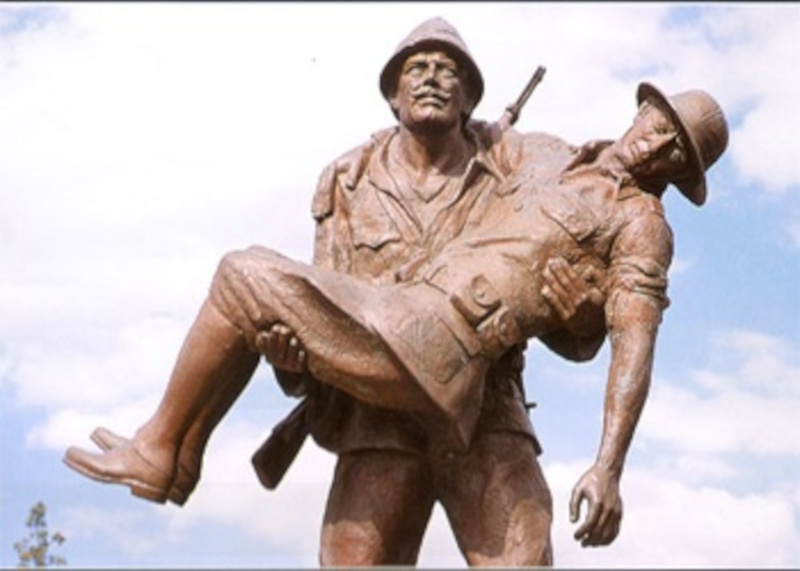
After lunch, the itinerary takes you down to the coast at Anzac Cove. This narrow, pebbly beach was the landing site for the Australian and New Zealand Army Corps on the morning of April 25, 1915. Instead of the flat plains they expected, the Anzacs were met with steep, rugged cliffs and determined Ottoman defenders. As you stand on the sand, look up to your right, and you will see a striking limestone formation that the soldiers nicknamed the "Sphinx" due to its resemblance to the Egyptian monument. For the men who landed here, the Sphinx was the first landmark they saw under heavy fire—a terrifying and unforgettable sight. Nearby, you will find the "Respect to Mehmetçik" statue, which depicts a Turkish soldier carrying a wounded Australian soldier on his back. This monument symbolizes the shared humanity that emerged even amid brutal conflict, a theme that resonates deeply with visitors from all nations.
Lone Pine and Bloody Ridge
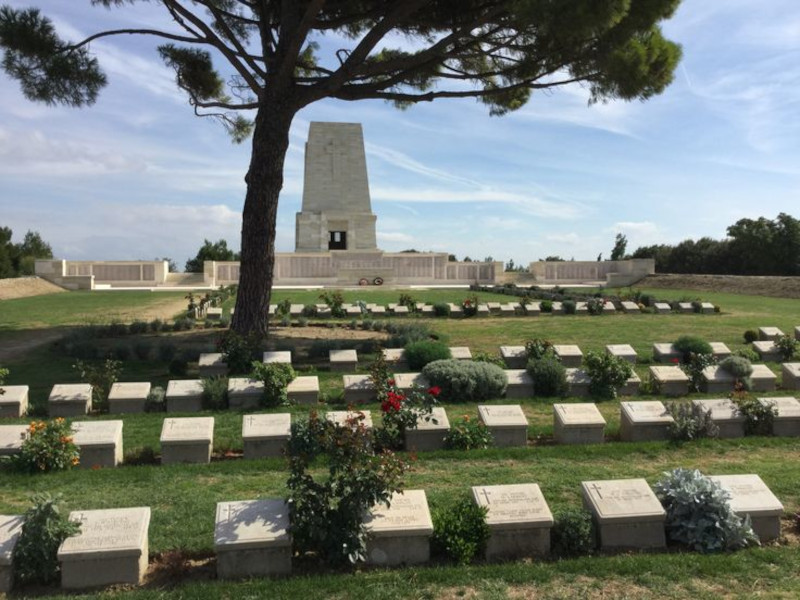
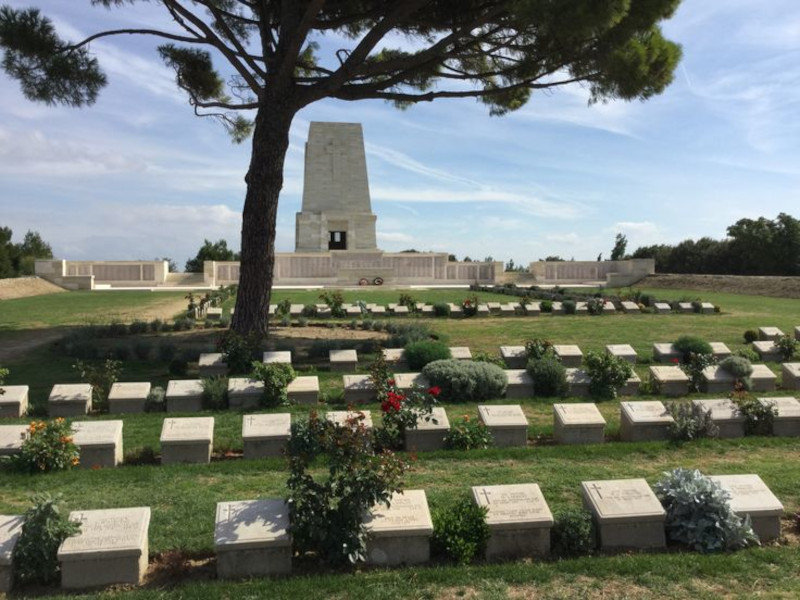
One of the most emotionally charged stops is the ridge known to Turks as Kanlı Sırt (Bloody Ridge) and to Australians as Lone Pine. This area saw some of the deadliest hand-to-hand combat of the entire campaign, particularly during the August Offensive. The trenches here have been carefully preserved; you can walk through them, ducking your head as the soldiers once did, and peer through the loopholes at the no-man's-land that separated the two sides. The Lone Pine Cemetery and Memorial stands as a serene, beautifully maintained garden where thousands of Australian soldiers are commemorated. The contrast between the peaceful pines and the brutality that occurred here is stark and moving. Take a moment to read the headstones—many mark the graves of teenagers who never returned home.
57th Infantry Regiment Memorial
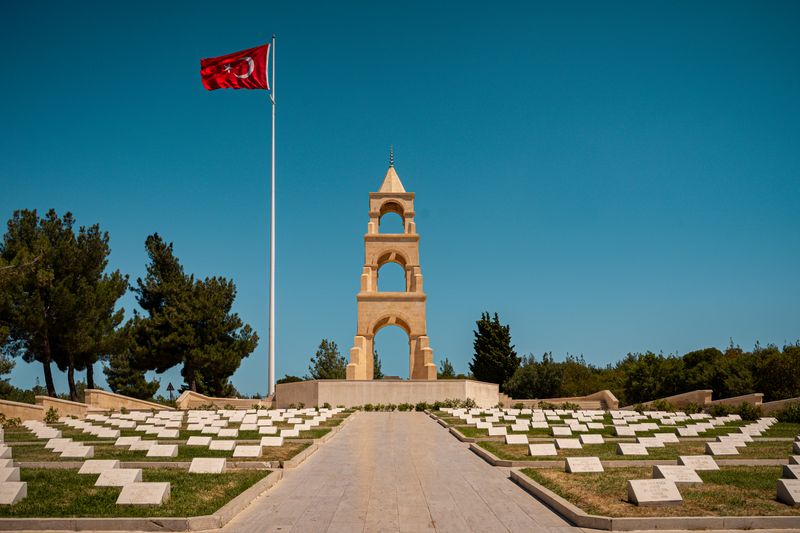
No visit to Gallipoli is complete without paying homage to the 57th Infantry Regiment, a unit of the Ottoman Army that was virtually annihilated during the early days of the invasion. Ordered by Mustafa Kemal (later known as Atatürk) to halt the advancing Anzacs at all costs, the regiment fought with such ferocity that every single soldier was either killed or wounded. The memorial features a striking bronze statue of a Turkish soldier holding a bayonet, lunging forward with fierce determination. It stands as a tribute to the courage and sacrifice of ordinary men who defended their homeland against overwhelming odds. Visitors often leave flowers or small stones at the base, a gesture of respect that transcends nationality.
Conk Bayırı – The Decisive Hill
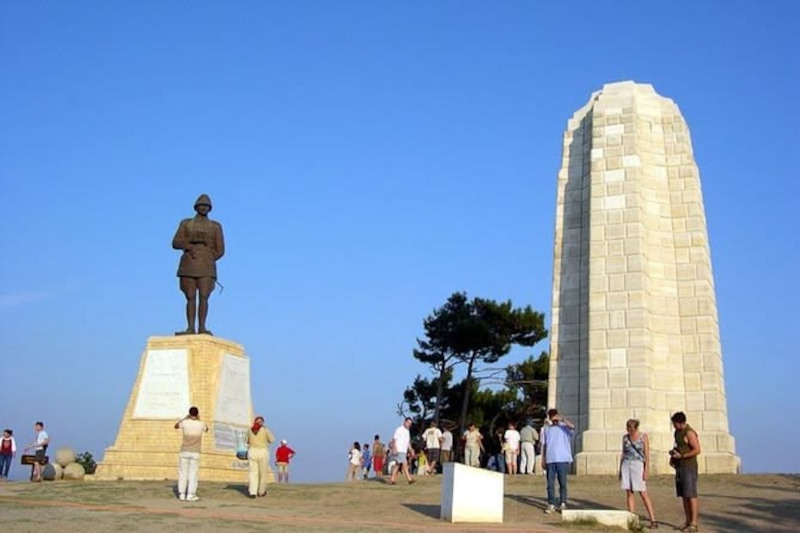
Your final historical stop is Conk Bayırı (Chunuk Bair), the highest point on the Gallipoli Peninsula. This ridge was the ultimate objective of the Allied offensive; whoever controlled it could command the entire battlefield. On August 8, 1915, Ottoman forces under Mustafa Kemal launched a desperate counterattack that sealed the fate of the campaign. It was here that Kemal issued his legendary order: "I do not order you to attack, I order you to die!" Standing at the summit, you enjoy a sweeping 360-degree view of the Dardanelles, the Aegean Sea, and the entire peninsula. The New Zealand Memorial at Chunuk Bair honors the soldiers from that nation who fought and fell in this sector. As you gaze across the landscape, you can see the strategic importance of every hill, gully, and beach—a natural fortress that ultimately proved unconquerable.
The Return Journey to Istanbul
By late afternoon, it is time to begin your journey back to Istanbul. The drive takes approximately four hours, giving you time to reflect on what you have witnessed. As the sun sets over the Thracian plains, the golden light casts long shadows, and the silence of the car contrasts sharply with the noise of history you experienced during the day. You might find yourself replaying the stories of courage, futility, and camaraderie that define Gallipoli. It is a long day—about 16 hours from start to finish—but it is one that will leave an indelible mark on your soul.
Why Choose a Guided Private Tour?
While it is possible to drive independently, a guided private tour offers significant advantages. Professional guides provide detailed historical context, navigate the complex network of sites efficiently, and share lesser-known stories that bring the battlefield to life. They know the best times to visit each location to avoid crowds, and they can customize the pace according to your interests. Our comfortable, air-conditioned vehicles, experienced drivers, and multilingual guides ensure that you focus entirely on the experience without worrying about logistics. Furthermore, we handle all entry fees, lunch arrangements, and timing so that you maximize every precious minute.
Final Thoughts
A day trip to Gallipoli from Istanbul is not a leisurely vacation excursion; it is a pilgrimage. It is an opportunity to honor the fallen, to understand the futility of war, and to appreciate the resilience of the human spirit. Whether you are a history enthusiast, a descendant of a soldier, or simply a traveler seeking profound experiences, this journey will stay with you forever. We invite you to join us for this unforgettable exploration of courage, sacrifice, and memory. For private tour bookings, customized itineraries, and further information, please do not hesitate to contact us. Let us make your Gallipoli experience truly exceptional.
Last Modification : 9/20/2026 12:43:02 PM