The Most Beautiful Spots to Take Photos in Ephesus
The Ancient City of Ephesus is a massive open-air museum that welcomes millions of visitors every year and is inscribed on the UNESCO World Heritage List. Located in the Selçuk district of İzmir, this ancient city offers a visual feast with its structures that carry the grandeur of the Roman Empire to the present day. However, Ephesus is not only famous for its historical texture but also for the unique frames it offers to photography enthusiasts. Whether you are a professional photographer or a traveler wanting to immortalize memories, it is possible to capture unforgettable shots on the marble streets of Ephesus. Here are the most beautiful spots to take photos in Ephesus, along with some tips and tricks.
1. The Library of Celsus: The Iconic Face of Ephesus
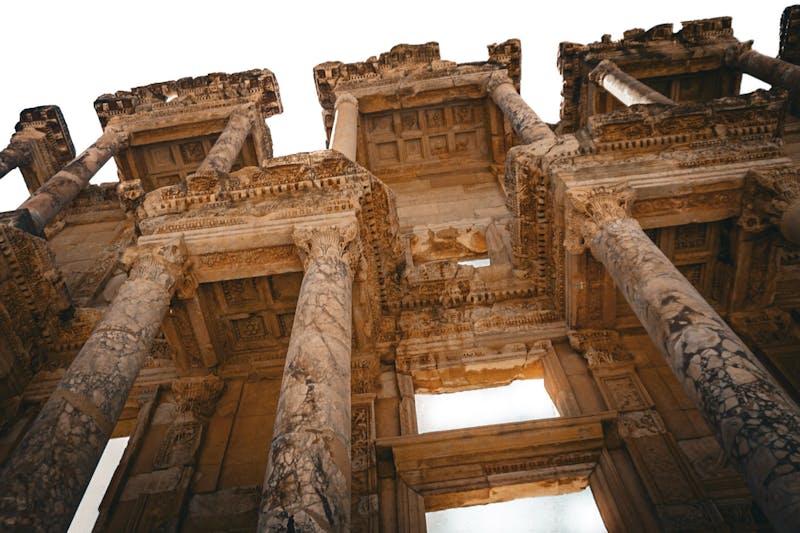
The first image that comes to mind when Ephesus is mentioned is undoubtedly the Library of Celsus. This structure, which was the third-largest library of the ancient world, was actually built as a monumental tomb for the Roman Governor Celsus by his son. With its two-story façade, massive columns, and four female statues in the niches (representing Wisdom, Intellect, Knowledge, and Virtue), it is practically waiting to become a photographic frame.
Photo Tip: Since the library's façade faces east, it receives the best light between 8:00 and 10:00 in the morning. During these hours, the sunlight hitting the façade highlights the details of the statues and columns. However, since this is Ephesus's most popular spot, arriving early is golden for capturing an empty frame without crowds. If you do encounter crowds, you can turn to detail shots with a 50mm or longer lens. Close-up shots of the statues on the façade and the architectural details in particular offer great frames that reflect the library's magnificence.
2. Curetes Street: The Main Artery of History
The marble-paved Curetes Street, extending from the Library upward, is one of the most atmospheric spots in Ephesus. This was the city's main street, surrounded by shops, fountains, and temples in antiquity. The street's slight slope and the texture of the marble stones add depth to your photographs.
Photo Tip: Photos taken from Curetes Street towards the Library of Celsus offer one of Ephesus's most iconic perspectives. The street's downward curve directs the eye straight to the library. Around 4:00 PM in the afternoon, the angle of the sun gives the reliefs and columns on the street a three-dimensional look. Additionally, compositions where you place the stone reliefs and column remnants on the sides of the street in the foreground can create an interesting contrast between the historical texture and the modern day.
3. The Temple of Hadrian: Where Elegance Meets Mythology
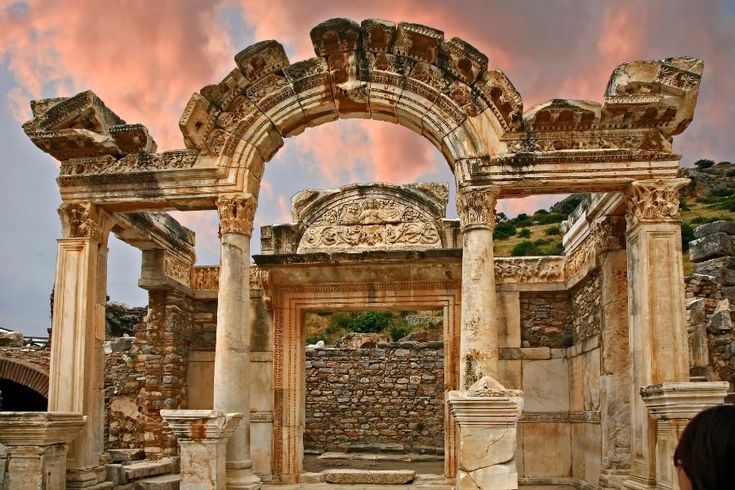
The Temple of Hadrian, located on Curetes Street, is one of the most elegant structures in Ephesus. It draws attention with its Corinthian columns and the exquisite reliefs on its arch. The Medusa relief at the temple's entrance, made to ward off evil spirits, is a particularly striking detail.
Photo Tip: The temple's front façade receives beautiful light between 3:00 and 4:00 PM. However, since this is also a very busy spot, patience is required. You can take impressive close-up shots by focusing on the arch details and column capitals. To avoid the crowds, you can move to the back of the temple to get a quieter and different perspective.
4. The Great Theater: The Peak of Grandeur
With a capacity of 24,000–25,000 people, the Great Theater is one of the largest theaters of the ancient world and one of Ephesus's most magnificent stops. Built into the hillside, this gigantic structure hosted everything from gladiator fights to public assembly meetings.
Photo Tip: Climbing to the top rows of the theater may be tiring, but photos taken from here reveal the entire city and the traces of the ancient harbor. Especially during sunset hours (5:00–6:00 PM), the west-facing theater captures wonderful light. The golden light falling on the steps as the sun sets amplifies the theater's grandeur. Additionally, wide-angle shots taken from the center of the theater towards the stage will convey the scale and acoustics of the structure.
5. The Terrace Houses: The Luxurious Life of Roman Society
The Terrace Houses, known as the "upscale" neighborhood of Ephesus, are luxurious residences decorated with mosaics and frescoes where wealthy Romans lived. Although this section requires a separate entrance fee, the photographic opportunities it offers are definitely worth it.
Photo Tip: The frescoes on the walls and the mosaics on the floors of the houses are unique details both in terms of art history and photography. You can immortalize these works of art with macro lenses or close-up shots. Also, photos taken from the inside of the houses looking outward create an interesting contrast between ancient life and the present.
6. Marble Street and the "Love House" Footprint
Marble Street, extending from the Library of Celsus to the Great Theater, was the busiest shopping and promenade route of antiquity. On the street, there is a footprint, a woman's head, and a heart figure, considered the world's first advertisement. This relief means: "On the left side, a beautiful woman awaits those with broken hearts or those seeking love."
Photo Tip: This interesting relief adds both meaning and a touch of humor to your photos. You can capture creative frames by standing next to the footprint on the ground or including it in your composition. Additionally, the wheel marks on the street's marble surface are striking details that reveal traces of ancient life.
7. The Temple of Artemis: What Remains of a Wonder
Only a few marble column fragments remain today from the Temple of Artemis, one of the Seven Wonders of the Ancient World. Yet even standing in this emptiness and imagining the temple's former glory is an impressive experience.
Photo Tip: Photos taken here at sunset, with the golden light, create a highly romantic and dramatic atmosphere. By framing the solitary columns and the surrounding emptiness, you can emphasize the contrast between past and present.
Last Modification : 8/31/2026 10:47:25 AM