The Ancient City of Ephesus
Located on the western coast of Anatolia, within the borders of today's Selçuk district of İzmir, the Ancient City of Ephesus is one of the longest-settled sites in human history. With a past spanning nearly 9,000 years from its foundation to the present day, Ephesus has hosted numerous great civilizations, from the Hittites to Ancient Greece, from the Roman Empire to Byzantium. However, like many ancient cities, it was eventually abandoned in the flow of history. This article will discuss Ephesus from the Hittite period through its rise during the Ancient Greek and Roman eras, and finally, the process of its abandonment.
The Hittite Period: From Apasa to Ephesus
The earliest known name of Ephesus is Apasa, which appears in Hittite records. In the 2nd millennium BC, Apasa was the capital of the Arzawa Kingdom, a powerful state in Western Anatolia, and one of the most important political and military centers of its time. Frequent wars occurred between the Hittite Empire and Arzawa, and eventually, the Hittite King Mursili II captured Apasa around 1320 BC. The mention of this city in Hittite clay tablets takes the history of Ephesus back to the 2nd millennium BC. However, Hittite rule did not last long. Around 1200 BC, with the migrations of the Sea Peoples, Hittite influence in the region ended, and Apasa was largely destroyed.
The Ancient Greek Period: Artemis and the Capital of Ionian Civilization
In the post-Hittite period, around 1050 BC, Ionian immigrants from the Greek mainland settled in the region and founded a new city near Apasa. This new city was named Ephesus, a name thought to be derived from the word "Arzawa." Soon after, it became one of the twelve cities of the Ionian League.
The most distinctive feature of Ephesus during the Greek period was its formation around a mother goddess cult. Artemis, who replaced the traditional Anatolian mother goddess Cybele, became the city's patron deity. The Temple of Artemis (Artemision), initiated by the Lydian King Croesus around 560 BC, was considered one of the Seven Wonders of the Ancient World. This temple made Ephesus not only a religious center but also a major hub of pilgrimage and commerce. Philosophers like Thales of Miletus, the poet Hipponax, and Heraclitus lived in Ephesus during this period.
The Roman Empire Period: The Jewel of Asia
In 129 BC, Ephesus became the capital of the Roman province of Asia. This status brought great prosperity and extensive construction to the city. The Roman period was the most magnificent era of Ephesus architecturally and culturally. The city's population exceeded 200,000, making it the second-largest city in the Mediterranean world after Rome.
Major structures built during this period include:
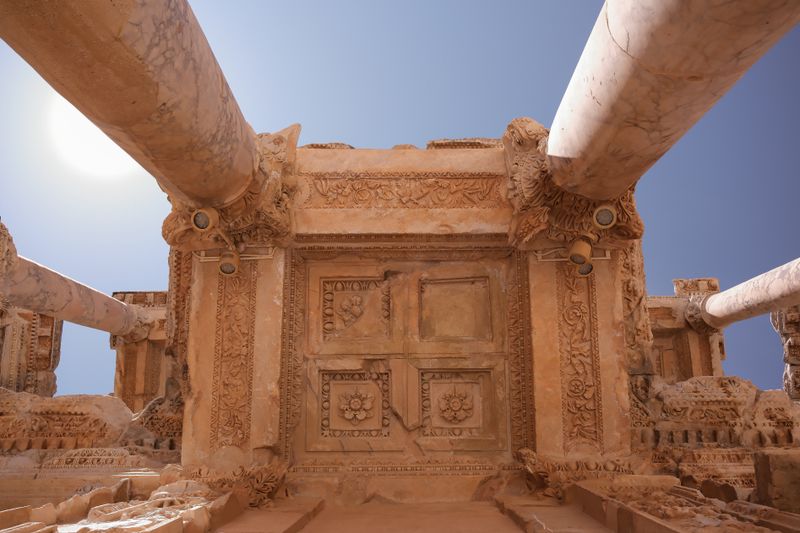
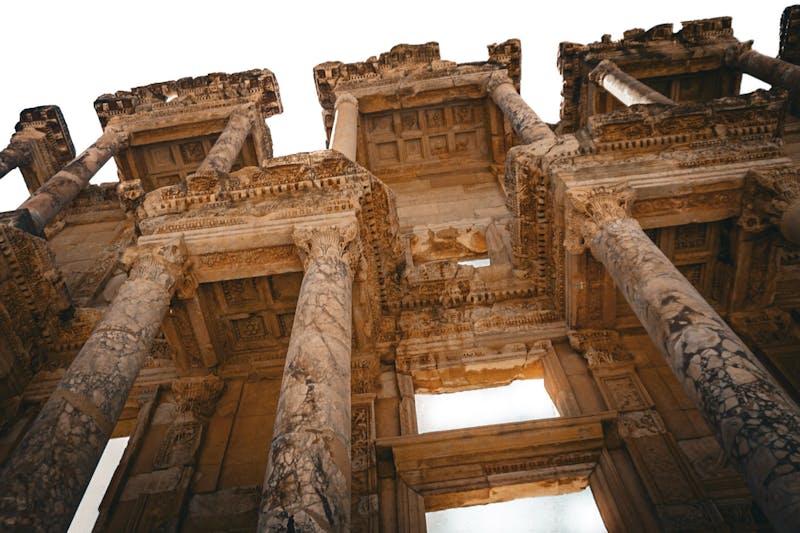
- The Library of Celsus (AD 117-135): Built by his son in memory of Roman governor Tiberius Julius Celsus, this was the third-largest library of its time.
- The Great Theatre (capacity 25,000): Believed to be where St. Paul preached.
- Arcadiane (Harbour Street): A 500-meter-long colonnaded street leading from the sea to the city.
- Hospital and Agora: Advanced health and commercial facilities of the era.
During the Roman period, Ephesus also became an important center for early Christianity. St. Paul lived in the city for a long time and wrote his epistles from here. It is believed that the Virgin Mary was brought to Ephesus by St. John and spent her final years there. The Council of Ephesus held in AD 431, which declared Mary as "Theotokos" (Mother of God), solidified the city's place in Christian history.
The Abandonment of Ephesus: From Sacred City to Ruin
The glorious days of Ephesus did not last forever. The abandonment process occurred through a combination of natural and man-made disasters:
- Siltation of the Harbor (Alluvial Problem): Ephesus's greatest economic advantage was its natural harbor on the Cayster River (Küçük Menderes). The alluvium carried by the river slowly filled the harbor over centuries. Although constant dredging was carried out during the Roman period to keep the harbor deep, this maintenance was neglected in the Byzantine period, rendering the harbor unusable. Today, the sea lies 7 km away from Ephesus.
- Earthquakes and Invasions: A major earthquake in AD 262 destroyed the Temple of Artemis and many other structures. Gothic raids also plundered the city.
- Economic Collapse: With the silting of the harbor, Ephesus lost its connection to Mediterranean trade routes, and its population rapidly declined. Trade was replaced by small-scale agriculture.
- Shrinkage during the Byzantine Period: From the 4th century AD onward, Ephesus lost its former glory. A new settlement began to form around the Basilica of St. John on Ayasuluk Hill (Selçuk). Due to Arab raids in the 7th century, the population abandoned the defenseless harbor city and moved up to the hill.
- The Seljuks and Final Abandonment: With the arrival of Turkish raids in the 11th century, the settlement of Ephesus further diminished. In 1304, the Aydınoğulları Beylik took control of the region, and Ayasuluk (present-day Selçuk) turned into a small Turkish town. The area where old Ephesus stood became completely empty. By the 15th century, during the Ottoman period, the ancient city was mentioned only as a village before finally being forgotten.
Ephesus Today
Ephesus was brought to light again through archaeological excavations that began in the 19th century. Today, a UNESCO World Heritage Site, Ephesus is an open-air museum visited by millions of tourists every year. The Library of Celsus, the Great Theatre, and the Terrace Houses reflect the grandeur of the Roman world to visitors. However, only a single column remains of the Temple of Artemis today.
The history of Ephesus shows that a city is not just made of stones; it is a dynamic organism where trade, faith, politics, and geography intertwine. This adventure from the Hittites to the present day is also striking evidence of how nature and human hands combine and separate. What doomed Ephesus to abandonment was neither wars nor invasions alone; the main factor was the silent but relentless natural process of the silting harbor. Like life itself, Ephesus was once born, grew, peaked, and finally quietly fell into the lap of history. Visiting its ruins today is essentially witnessing all the stages of a civilization from birth to death.
Last Modification : 9/20/2026 12:43:50 PM