The Snake Mansion
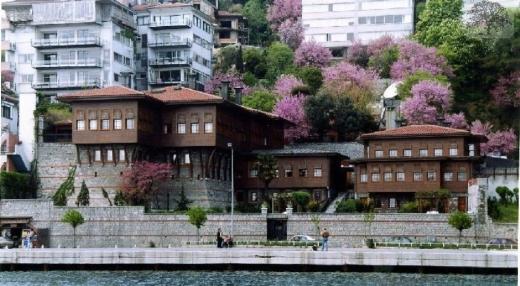
One of the pearls of the Bosphorus, the Yılanlı Yalı (Snake Mansion) draws attention not only with its architectural beauty but also with the curious story behind its name and its resilience that has defied centuries. Located south of Rumelihisarı, right next to Aşiyan Park, this structure gently greets the Bosphorus from its garden atop a retaining wall. It stands as a silent witness to a colorful history stretching from the Ottoman Empire to the present day.
A Mansion Named After a Lie
The name of the Yılanlı Yalı was born from a sultan's whim and a courtier's cunning. According to legend, during a Bosphorus excursion, Sultan Mahmud II admired the mansion and wished to purchase it. He asked his Musahip (confidant), Said Efendi, to whom the mansion belonged. Said Efendi, who had his own eye on the property, concocted a lie to dissuade the sultan:
"My Sultan, that mansion was built on top of snake burrows. Consequently, fires constantly break out there."
Upon hearing this, Sultan Mahmud abandoned his intention to buy the mansion. However, Said Efendi also failed to acquire it. All that remained was a lie and a name forever associated with that lie: The Snake Mansion (Yılanlı Yalı).
A Deep-Rooted History: From the Reisülküttab to a Holding Company
The history of the Yılanlı Yalı is linked to prominent figures of the Ottoman bureaucracy. Built during the reign of Selim III, one of its earliest known owners was Reisülküttab (Chief Scribe) Mustafa Efendi. Later, its ownership passed through the hands of figures such as Şemseddin Efendi, Rasid Efendi, and Yahya Efendi.
Şemseddin Efendi, who later made additions to the northern section of the mansion, also extended its garden all the way to the Zağanos Paşa Tower in Rumelihisarı. Today's Aşiyan Mansion is located precisely on this extensive former estate.
In 1989, the mansion was purchased by a businessman and rebuilt in the bağdadi (timber-frame with infill) style, with exterior wood and interior concrete. It was divided into three sections and allocated for the residence of three brothers. Purchased by a holding company in 2001, the mansion continues to exist today as one of the Bosphorus's most prominent historical structures.
Architectural Elegance and Lost Beauties
The Yılanlı Yalı reflects the traditional Ottoman mansion (yalı) architectural style, using the ahşap-bağdadi (wooden lattice with masonry infill) technique. It originally consisted of two main sections: the Selamlık (men's quarters/reception area) and the Harem (private family quarters). Unfortunately, in May 1964, the magnificent harem building, which had over forty rooms, was completely destroyed by fire. Only the selamlık section survives today. The harem was located south of the current structure, in an area now covered with trees.
The recessed shelves within the harem's stone walls once held valuable books from the time of Reisülküttab Mustafa Efendi. The rooms were lined with built-in sofas (sedirs), and the walls were covered with ornately decorated built-in cabinets. None of these details exist today.
The selamlık section has managed to preserve some of its grandeur. The entrance gate opens into a domed hall. In the center of this hall, known as the Meskhane or Taş Oda (Stone Room), there was a pool with a fountain for cooling and a selsebil (a cascading water fountain set against the wall). Mirrors were placed on the ceilings to enhance the sense of height. This stone room, which remained cool in summer and winter, was the ideal place for hosting guests.
The Sacred Relic: The Chamber of the Holy Beard
One of the most distinctive features setting the Yılanlı Yalı apart from other Bosphorus mansions was the Chamber of the Sacred Beard (Sakal-ı Şerif Odası) located on the top floor of the selamlık section. During the month of Ramadan, on holy nights (kandils), and during religious festivals, this room was opened for visits. As in many Ottoman mansions and yalıs, the sacred beard (a relic of the Prophet Muhammad) was respectfully visited here. In this respect, the Yılanlı Yalı was among the fortunate structures that once housed a holy relic.
The Main Hall, Dining Room, and Bathhouse
The mansion's main hall is situated in the southernmost part, closest to the sea. Behind this section lies a study featuring a fireplace. During the Ottoman period, this was a private space where the masters of the house conducted business and correspondence. Immediately behind this study was a magnificent dining room that could accommodate a 24-person table.
After the harem burned down, renovations in the selamlık section subdivided the large guest salons into smaller rooms such as bedrooms and storage areas. A large bathhouse also existed on the hill behind the mansion. At the beginning of the sloping road leading up to the mansion, an elegant square fountain would greet visitors.
Modern Interventions and Loss of Authenticity
In 1910, the fountain pool and selsebil in the domed stone room were removed, and the floor and mirrored ceiling were covered with wooden parquet. Various other additions were made. Unfortunately, these interventions caused the mansion to largely lose its original fabric and aesthetic integrity.
Another loss concerns the infrastructure: the 500-year-old coal cellars (kömürhanes) beneath the mansion were left approximately 7 meters behind the original shoreline when the coastal road was widened, severing them from their original context.
Last Modification : 9/1/2026 12:03:42 PM