The first three chapters of the Book of Revelation, one of the most mysterious and influential texts in Christian history, contain letters addressed directly to seven ancient cities located within the borders of modern-day Turkey. Traditionally attributed to John (known as John the Theologian) while exiled on the island of Patmos, these letters not only offer spiritual counsel to early Christian communities but also vividly illuminate the socio-political and religious atmosphere of this strategic region under Roman rule. The cities of Ephesus, Smyrna (Izmir), Pergamon (Bergama), Thyatira (Akhisar), Sardis (Sart), Philadelphia (Alaşehir), and Laodicea (Denizli) have come to be known as the "Seven Churches," each receiving a distinct message. This article examines the historical and archaeological context of each church, the theological meaning of the messages conveyed to them, and their present-day status.
1. Ephesus – Selçuk, Izmir
Ephesus is the most prominent of the seven churches and the first to receive a letter. As the capital of the Roman province of Asia and a major port city, it was famous for the Temple of Artemis (one of the Seven Wonders of the Ancient World). In John's letter, the Ephesian church is praised for its "labors, patience, and testing of false apostles," but is warned for having "abandoned its first love" (Revelation 2:4). This criticism symbolizes a faith that had become ritualized over time but lost its essence. Today, Ephesus, with the House of the Virgin Mary, the Basilica of St. John, and its grand theater, remains one of the most important pilgrimage sites for Christians.
2. Smyrna – Izmir
Among the letters, only Smyrna and Philadelphia receive no criticism. The church of Smyrna, though enduring great poverty and persecution, is described as "rich in spirit." The "ten days of tribulation" mentioned in the letter traditionally symbolizes the persecutions during the reign of Emperor Domitian (AD 81–96). Today, Izmir is Turkey's third-largest city and preserves early Christian remains such as the Martyrdom of Polycarp. Notably, the name "Smyrna" has survived unchanged to the present day.
3. Pergamon – Bergama, Izmir
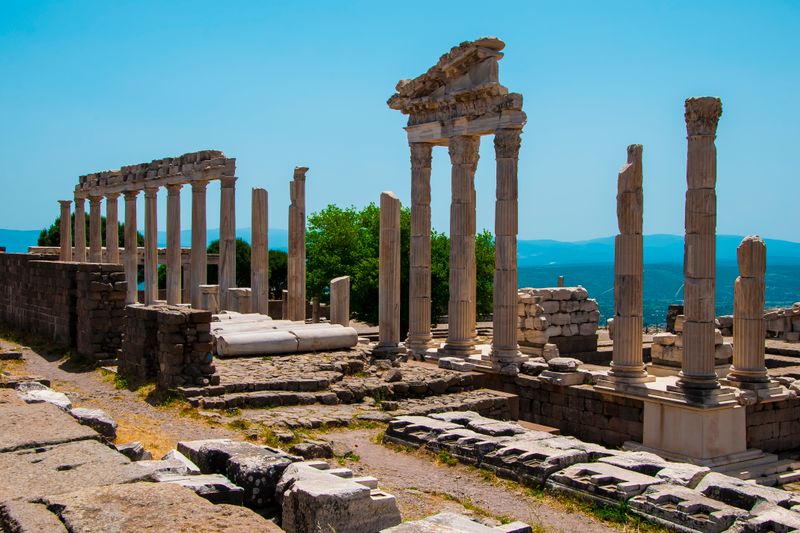
In Roman times, Pergamon was a major religious and cultural center, renowned for the Altar of Zeus, the Asclepion (temple of the god of health), and a great library. The Book of Revelation describes this city as "the place where Satan’s throne is" (Revelation 2:13). This phrase is interpreted as a reference to the grandeur of the city's pagan altars or the Roman imperial cult. The church at Pergamon is reminded of the faithful martyr Antipas, who was killed there. Today, Bergama is notable for the remains of the Altar of Zeus (often interpreted as 'Satan's Throne', though now in Berlin's Pergamon Museum) and the Red Basilica (Temple of Serapis).
4. Thyatira – Akhisar, Manisa
Although smaller and more focused on trade than the other cities, Thyatira receives one of the longest promises in the letters. The letter praises the church for its "love, faith, service, and perseverance," but warns against the false prophetess "Jezebel," who allegedly encouraged sexual immorality and idolatry. Thyatira is also known as the hometown of Lydia, the purple cloth dealer from Philippi mentioned in Acts 16:14. Today, Akhisar is a modern town built over the ancient city, which means archaeological remains are limited.
5. Sardis – Sart, Manisa
Sardis was the capital of the Lydian Kingdom and famed for its material wealth. However, the letter to the church there is severe: "You have a reputation of being alive, but you are dead" (Revelation 3:1). These words describe a community that appeared vibrant but was spiritually lifeless. Just as Sardis' acropolis was easily captured by enemies due to a lack of vigilance, the church is urged to regain its spiritual alertness. Today, at Sardis, visitors can see the remains of an ancient synagogue (significant evidence of a Jewish presence), a gymnasium, and the Temple of Artemis.
6. Philadelphia – Alaşehir, Manisa
Like Smyrna, Philadelphia receives no rebuke. It is praised for its faithfulness despite limited strength: "You have little strength, yet you have kept my word" (Revelation 3:8). The image of an "open door" in the letter symbolizes the missionary calling of this church and its perseverance despite hardship. Philadelphia was historically known as a city that endured repeated earthquakes. Today, Alaşehir remains a living settlement atop the ancient city, containing ruins such as the Church of St. John.
7. Laodicea – Denizli
Laodicea receives the harshest criticism of all the seven churches. The wealthy commercial city was known for its banking system, its eye salve, and its black wool industry. The letter uses these characteristics ironically: "Because you are lukewarm—neither hot nor cold—I am about to spit you out of my mouth" (Revelation 3:16). The calls for "gold," "white garments," and "eye salve" criticize the church's spiritual poverty in contrast to the city's material wealth. The imagery is reinforced by the fact that Laodicea's water was lukewarm and nauseating (unlike the hot springs of nearby Hierapolis and the cold, refreshing water of Colossae). Today, the ancient city of Laodicea in Denizli welcomes visitors with its impressive stadium and theater, brought to light through ongoing archaeological excavations.
The Seven Churches not only bear witness to the challenges faced by early Christianity but also carry a universal message: themes of faith, wealth, persecution, mission, morality, and faithfulness remain relevant for every Christian community across the centuries. Today, most of these ancient cities are archaeological sites, offering a unique heritage that is both archaeological and theological. In this regard, Turkey serves not only as a bridge between East and West but also as a living inscription of the history of faith. Among the Roman columns, each ruin echoes the voice of John into the present day: "Whoever has ears, let them hear what the Spirit says to the churches."
Plan Your Own Seven Churches Journey
If this article has inspired you to walk in the footsteps of the early Christians and witness the profound heritage of the Seven Churches of Revelation, we are here to help. We specialize in organizing private and group tours to all seven ancient sites: Ephesus, Smyrna, Pergamon, Thyatira, Sardis, Philadelphia, and Laodicea. Our services include:
Customized itineraries tailored to your interests, time frame, and spiritual focus.
Professional, licensed tour guides with deep knowledge of biblical history, archaeology, and theology.
Comfortable, air-conditioned transportation with door-to-door service from any major city (Izmir, Kusadasi, Istanbul, etc.).
Optional extensions to other biblical sites such as Patmos (Greece), Hierapolis (Pamukkale), Colossae, and Miletus.
Assistance with accommodation, meals, and all logistical details.
Whether you are a pilgrimage group, a Bible study class, or an individual traveler seeking a meaningful journey, we ensure a seamless and unforgettable experience. Contact us today to start planning your Seven Churches tour of Turkey.