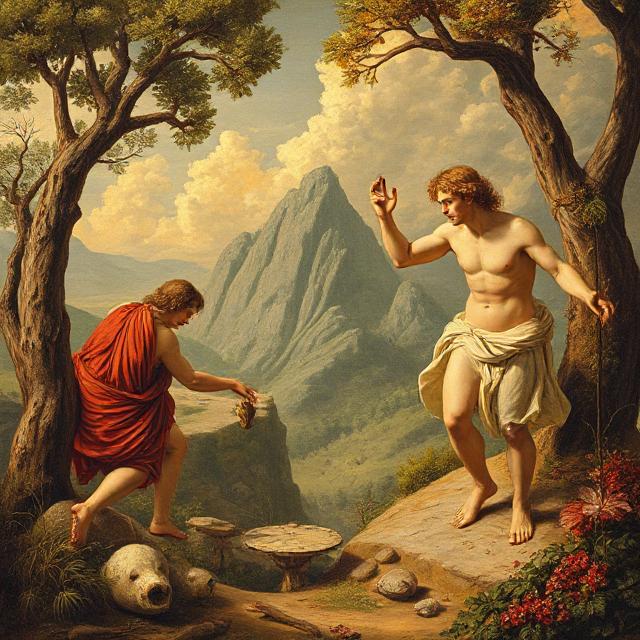
The Expulsion from Paradise
One of the oldest narratives in human history, the story of the “Expulsion from Paradise,” is not merely a religious doctrine but a foundational element of cultural identity, moral values, and existential inquiry. Found in the Book of Genesis in the Torah, this account begins with Adam and Eve’s transgression—eating the forbidden fruit—and ends with their severance from paradise. This article explores the theological content, symbolic elements, and cultural reflections of this profound narrative.
Theological Background
The expulsion narrative centers on the first direct relationship between God and humanity, and its subsequent rupture. Adam and Eve’s act of eating the forbidden fruit symbolizes disobedience to divine command and forms the basis of the concept of “original sin.” God’s declaration to Adam—“You are dust, and to dust you shall return”—emphasizes the mortal nature of humanity and its earthly destiny.
Symbolic Elements
Nakedness and Awareness
Adam’s realization of his nakedness marks the loss of innocence and the emergence of consciousness. This awareness signifies the beginning of moral responsibility and self-reflection.
The Forbidden Fruit
The fruit represents knowledge and free will. By consuming it, humans gain the ability to discern good from evil, but also transgress divine boundaries.
The Tree of Life
Symbolizing eternal life, the Tree of Life becomes inaccessible after the transgression. God’s restriction reinforces humanity’s mortality and separation from divine immortality.
Cherubim and the Flaming Sword
The placement of cherubim and a flaming sword at the entrance to Eden symbolizes the sanctity of paradise and the irreversible boundary between the divine and the human realm. These images serve as visual representations of divine justice and protection.
Cultural Reflections
The expulsion narrative resonates not only in the Torah but across various cultures and artistic forms. In Islamic tradition, a similar account appears in the Qur’an. In Mesopotamian mythology, Enkidu’s encounter with civilization, and in Greek mythology, Prometheus’s theft of fire, both echo the theme of punishment following the pursuit of knowledge.
In Turkish art, while direct depictions of this narrative are rare, the “Tree of Life” motif frequently appears in carpets and kilims. This figure can be interpreted as part of paradise imagery and cosmic order. Additionally, Ottoman miniature art—especially under Western influence—has occasionally portrayed the expulsion scene.
The expulsion from paradise is a multilayered narrative that explores humanity’s relationship with God, the balance between free will and responsibility, and the hardships of earthly life. It is not only a theological teaching but also a cultural legacy and artistic inspiration. Adam’s labor upon the earth becomes a metaphor for the sanctity of human effort and the search for meaning—a theme that continues to resonate today.
Last Modification : 10/12/2026 2:55:35 AM