Lystra
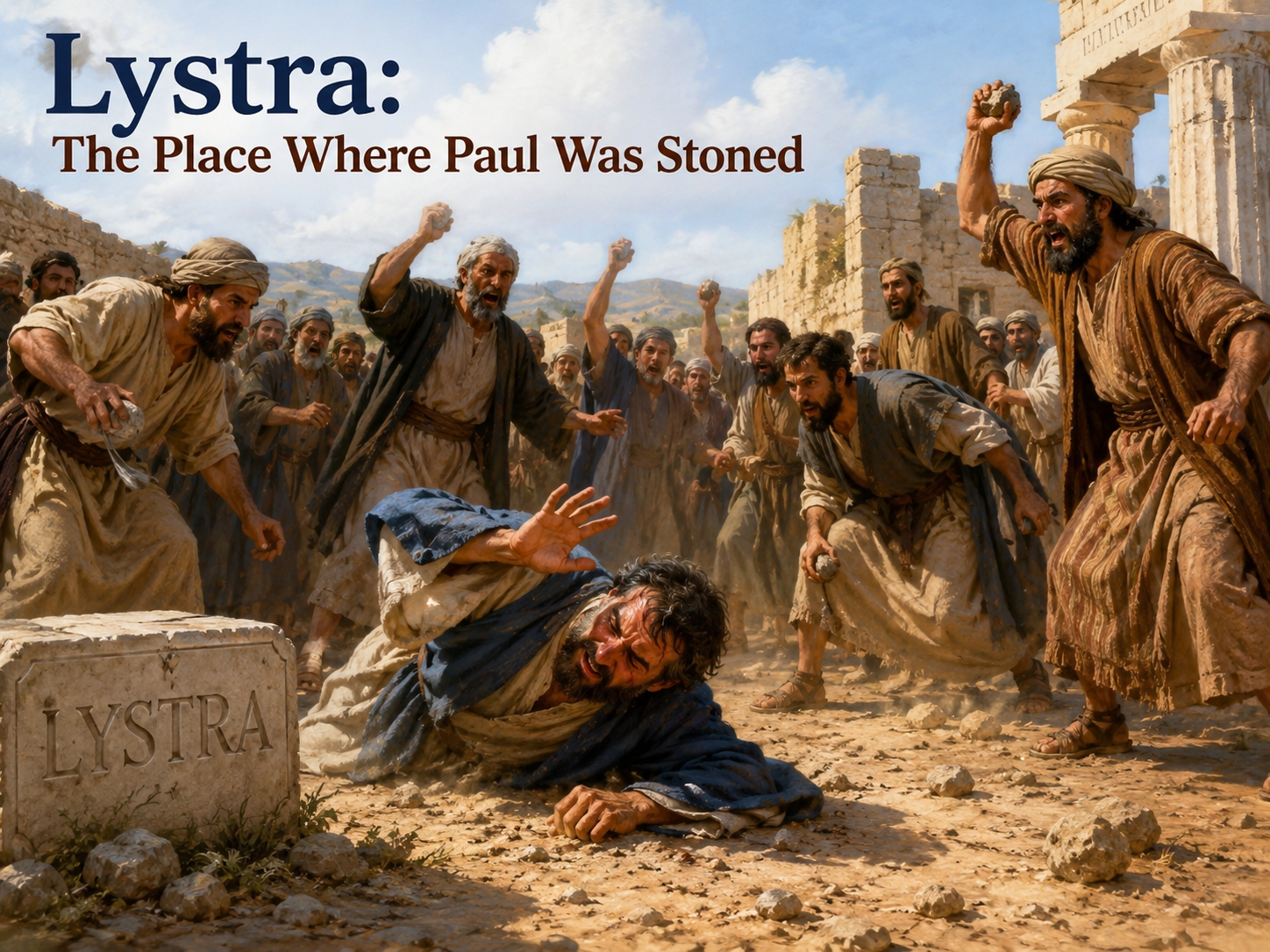
Lystra is an ancient city located within the borders of modern-day Turkey, in the region of ancient Lycaonia. There are varying usages regarding the name of this city. In some sources and local dialects, it is also referred to as "Kilistra," and it is also pronounced as "Listra." This diversity of names is interesting as it demonstrates how the city has been referred to in different languages and cultures throughout history. It is mentioned in the New Testament's Book of Acts as one of the significant stops that the Apostle Paul visited during his missionary journeys. Lystra stands out in Christian history as the site of both a miraculous healing and the stoning incident that became a symbol of the severe persecution Paul endured. This event reveals the difficulties encountered during the spread of early Christianity and the resilience of faith. The Miraculous Healing in Lystra and the People's Reaction Paul and Barnabas had taken refuge in Lystra after facing persecution in Iconium (Konya) and Pisidian Antioch. In this city, Paul healed a man who had been crippled from birth. According to Acts 14:8-10, Paul looked intently at the man, saw that he had faith to be healed, and called out in a loud voice, "Stand up on your feet!" The man jumped up and began to walk. This miracle deeply impressed the people of Lystra, but they misinterpreted the event and assumed Paul and Barnabas were gods. They called Barnabas Zeus and Paul Hermes because he was the chief speaker. Even the priest of Zeus from the city brought bulls and wreaths to offer sacrifices to them. Paul and Barnabas tore their clothes in great distress and cried out that they too were mere humans and that the people should turn to the living God. This event is significant as it shows how volatile popular religious beliefs could be and how miracles could be misunderstood. The Stoning of Paul However, this positive atmosphere in Lystra did not last long. Jews who came from Antioch and Iconium and opposed Paul's teachings stirred up the crowds and turned them against Paul. As a result of this incitement, Paul was stoned, dragged out of the city, and left for dead. There were several fundamental reasons why these Jews from Antioch and Iconium took such a harsh stance against Paul. Theological reasons were at the forefront; Paul was proclaiming Jesus as the risen Messiah and placing Him above Moses, which threatened the authority of Jewish religious leaders. Additionally, Paul's preaching that uncircumcised Gentiles could also believe threatened the boundaries and identity of the synagogue. Paul's success was causing the "God-fearing" Gentiles who provided financial support to the synagogues to side with Paul, which undermined the synagogues' financial and social status. Paul had previously faced similar opposition in Iconium and Antioch, and the opponents from these cities had deliberately traveled to Lystra to hinder Paul's success there. Miraculous Deliverance and the Continued Mission The stoning of Paul is a turning point in early Christian history. After the stoning, when the disciples gathered around him, Paul stood up and went back into the city. There are different interpretations regarding Paul's survival. According to believers, this was a miracle of God's protection and the power of prayer. Luke, the author of Acts and a physician, notes that the crowd "supposed" Paul was dead, presenting this as the people's assumption rather than a medical certainty. According to another interpretation, the trauma Paul experienced, while severe, may not have been fatal; loss of consciousness and shock may have caused him to be presumed dead. However, his ability to travel about sixty miles (approximately one hundred kilometers) the next day points to an extraordinary recovery. In both interpretations, Paul's survival strengthens the idea that there was divine protection and purpose. This event is a concrete example of what Paul later wrote to the Corinthians: "We are pressed on every side, but not crushed; perplexed, but not in despair; persecuted, but not abandoned; struck down, but not destroyed." The day after the stoning, Paul went with Barnabas to Derbe and continued preaching the gospel there. Even more remarkably, on the return journey, he passed through Lystra again, strengthening the believers there and encouraging them to remain steadfast in the faith. Paul's experience in Lystra became a testament to the truth of his message and the power of God.
The stoning incident in Lystra was one of the most difficult experiences in Paul's missionary life, yet it also stands as one of the strongest proofs of his faith, determination, and God's protection. Paul later mentioned this event in his letter to Timothy, reminding him of the persecutions he endured in Lystra and how the Lord rescued him from them all. This event also contributed to the strengthening of the young church in Lystra, which was also the hometown of Timothy. This ancient city, also known as Kilistra or Listra, maintains its historical and religious significance alongside its various name forms. Paul's experience in Lystra serves as an inspiring example that the challenges encountered on the journey of faith can be overcome through God's power and grace. Furthermore, archaeological evidence and texts that have survived to the present day support the historical reality of this event. The episode in Lystra remains in memory as one of the most striking and instructive chapters of early Christian history.
Last Modification : 8/31/2026 10:06:19 AM