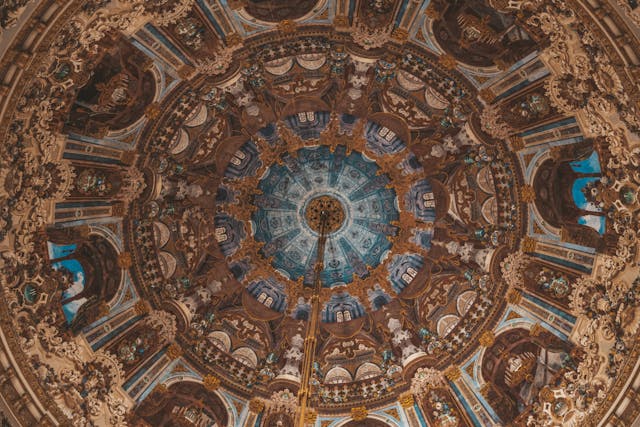

Dolmabahçe Palace
Located on the European shore of Istanbul, in the Beşiktaş district, Dolmabahçe Palace is one of the most brilliant examples of late Ottoman architecture. Built in the mid-19th century, this magnificent structure is a symbolic representation of the Ottoman Empire's transition from traditional architectural understanding towards Western influences. Operating as a museum-palace today, this historic building offers visitors both the opulence of the late Ottoman era and a significant slice of republican history.
Historical and Political Background: A Response to the "Sick Man"
The construction of Dolmabahçe Palace carries a profound political message. In the 19th century, a rumor and political analysis became widespread among European countries, particularly articulated by Russian Tsar Nicholas I, suggesting that "the Ottoman Empire is a sick man, and he will soon die." This idea, that the Ottoman Empire was in decline and entering a process of dissolution, became a frequently used metaphor in European diplomacy.
Sultan Abdülmecid wanted to give a concrete response to this insulting "sick man" image and the perceived loss of Western power. His goal was to send a message to the entire world, especially to European states and their ambassadors in Istanbul, that the Ottoman Empire was still great, strong, modern, and magnificent. The construction of Dolmabahçe Palace was precisely this political and symbolic response. By building a magnificent palace adorned with Western architectural styles at the most prominent point on the Bosphorus, Sultan Abdülmecid aimed to prove that the Ottoman Empire's economic and cultural power endured, that it was not "sick." In this sense, the palace should be evaluated as a display of power and a diplomatic move.
Visits and Entrance Fees
Dolmabahçe Palace, under the supervision of the Directorate of National Palaces, is open for visits on certain days of the week. Entrance fees vary according to the visitor profile:
- Foreign Visitors: Full ticket 2,000 TL
- Local Visitors: Full ticket 250 TL
- Student Tickets:
- Foreign students aged 6-25: 300 TL (ISIC card required)
- Discounted entry available for local students
- Free Entry: All children aged 0-6
- Important Note: An internationally valid ISIC (International Student Identity Card) must be presented when purchasing a foreign student ticket.
Special Day: November 10th
Every year on November 10th, the commemoration day of Mustafa Kemal Atatürk, the founder of the Republic of Turkey, Dolmabahçe Palace is open to all visitors free of charge. On this special day, visitors follow a restricted route within the palace due to the memorial ceremonies. During this special tour, visitors have the opportunity to see the room where Atatürk passed away on November 10, 1938. The room, including the moment of silence at 09:05, preserves Atatürk's memory with great respect and is open to visitors. November 10th is the only official day when video recording and photography are permitted inside the palace.
Planning Your Visit and Practical Information
A daily visitor quota is in effect at the palace. On busy days, especially weekends and public holidays, the palace may reach this quota early and will not admit more visitors. Therefore, it is highly recommended to visit Dolmabahçe Palace in the morning hours, preferably at opening time (09:00), to ensure entry and for a more peaceful experience. This provides both a more comfortable visit and allows you to better experience the palace's historical atmosphere.
The Palace's Magnificent Garden
Just like the palace itself, its garden is also magnificent. This 45,000 square meter green area is designed as a historical park. Notable elements of the garden include:
- Sultan's Gate (Saltanat Kapısı): The magnificent Sultan's Gate, the main entrance of the palace used by the sultan, is one of the garden's most important architectural elements. Its splendid design symbolizes the power of the Ottoman sultanate.
- Magnolia Trees: The garden is adorned with wonderful magnolia trees, which emit a beautiful fragrance especially in spring when they bloom. These rare trees are indicators of the palace garden's botanical richness.
- Lion Statues: Strategically placed lion statues can be seen at various points in the garden. The lion, as a symbol of strength and dominion, holds an important place in the palace garden's decoration.
The garden is not just a resting place for visitors; it is an indispensable part that complements the overall aesthetics of the palace and integrates with the Bosphorus view.
The Three Main Sections of the Palace and Visiting Suggestions
Dolmabahçe Palace consists of three main sections, and at least three hours is recommended to properly tour each part. This duration is ideal for fully experiencing the palace's magnificence, details, and historical atmosphere. Visitors participate in guided tours, during which they explore these sections consecutively.
1. Selamlık (Mabeyn-i Hümâyûn)
The first section of the palace, the Selamlık, is the official section where state affairs were conducted. Here are the halls where the sultan met with statesmen, reception halls, and administrative units. The Selamlık section also includes the Muayede Hall, one of the palace's most magnificent spaces. This section is filled with architectural details reflecting the understanding of late Ottoman governance and diplomatic protocol.
2. Harem-i Hümâyûn
The second section of the palace, the Harem, is the private living area of the Ottoman sultan and his family. This section contains the sultan's bedroom, rooms belonging to family members, relaxation areas, and the quarters of the harem eunuchs. The Harem is the most intimate and personal part of the palace, offering insight into the daily rituals and family dynamics of Ottoman palace life. The room containing Mustafa Kemal Atatürk's deathbed is also located in this section.
3. Painting Museum
The third section of the palace is the Painting Museum, located in the Crown Prince's apartment building. This museum exhibits paintings specially commissioned for the palace's decoration and valuable works from the Ottoman palace collection. The museum contains oil paintings by famous painters of the era, sultan portraits, and historical compositions. This collection showcases the development of 19th-century Ottoman painting and the palace's artistic patronage.
Muayede Hall: The Magnificent Heart of the Palace
The most splendid space in the Selamlık section is undoubtedly the Muayede Hall. Meaning "festive greeting," this vast hall is where Ottoman sultans received state officials and the public on holidays, and where the most important official ceremonies were held. To convey Sultan Abdülmecid's message of power intended for Europe, this hall was designed with particularly exaggerated opulence.
Architectural and Decorative Features:
- With its 36-meter high dome, it is the palace's tallest structural element. The three-dimensional painted decoration inside the dome creates an optical illusion, making the space appear much higher than it actually is.
- Turkey's Largest Carpet: A huge Hereke carpet, approximately 125 square meters in size, covers the hall's floor. This special weave is one of the rarest examples of Turkish carpet art.
- Magnificent Chandelier: One of the world's largest Bohemian crystal chandeliers hangs in the center of the hall. This 4.5-ton chandelier with 750 bulbs is the palace's lighting masterpiece.
Current Function:
The Muayede Hall is still used today for state protocol meetings and special receptions. When such special events occur, it is usually announced a day in advance that the palace will be closed to visitors on that day.
Important Note: Visiting Rules For the security of the palace and the protection of historical artifacts, video recording and photography inside the palace, including the Muayede Hall, are strictly prohibited on regular visiting days. This rule is enforced more strictly, especially during state receptions. Only on November 10th is this restriction temporarily eased as part of the memorial ceremonies.
Architecture and Structural Features
The palace was completed in 1856 and designed by the famous architects of the period, Garabet Balyan and his son Nigoğos Balyan. The structure covers an area of 110,000 square meters. Its eclectic style blends Baroque, Rococo, and Neoclassical styles. Its exterior is made of white marble, and its interior decoration was influenced by European palaces. This preference is an architectural reflection of the message "we are modern and strong" that the palace conveyed to the West.
Interior Decoration and Artistic Details
The interior decoration of Dolmabahçe Palace is extremely rich:
- Decorations made using 14 tons of gold (gold leaf)
- The world's largest Bohemian crystal chandelier (weighing 4.5 tons, with 750 bulbs)
- Furniture from various European countries
- Paintings specially commissioned for the palace's decoration (exhibited in the Painting Museum)
Historical Significance
Dolmabahçe Palace hosted the last six sultans of the Ottoman Empire and the last caliph, Abdülmecid Efendi. At the same time, it holds special historical significance as the place where Mustafa Kemal Atatürk, the founder of the Republic of Turkey, conducted his studies in Istanbul, and where he passed away on November 10, 1938. The room where Atatürk died has been preserved as it was and is the focal point of the memorial ceremonies held every year on November 10th.
Dolmabahçe Palace Today
The palace has been operating as a museum-palace since 1984. It is open to visitors under the supervision of the Directorate of National Palaces. The valuable objects, furniture, and artworks inside are carefully preserved and restored. The palace gardens are popular relaxation spots for Istanbul residents and tourists.
Visiting hours are generally between 09:00 and 16:00, 6 days a week (usually closed on Mondays), but since changes may occur during public holidays and special events, current information should be checked before visiting. As the palace cannot be visited without a guide, visitors tour the palace in groups accompanied by a guide. The standard tour route is organized to include the Selamlık, Harem, and Painting Museum sections.
Dolmabahçe Palace is a historical treasure not only for its architectural beauty but also because it witnessed the late period of the Ottoman Empire and the early period of the Republic of Turkey. This magnificent structure on the Bosphorus shore of Istanbul also holds deep meaning regarding the purpose of its construction: a manifesto demonstrating the power and modernity of the Ottoman Empire against the "sick man" image prevalent in Europe, initiated by Sultan Abdülmecid. It offers its visitors a visual experience and promises an unforgettable journey through the pages of history. At least three hours are needed to properly tour the palace's three main sections (Selamlık, Harem, and the Painting Museum), and additional time to explore the magnificent garden, to fully experience this historical encounter. Due to the daily visitor quota, it is strongly recommended to plan your visit for the early morning hours. Especially the free admission and memorial program organized every year on November 10th keep alive the memory of Mustafa Kemal Atatürk, one of the most important figures in Turkish history, and offer the opportunity to observe a moment of silence in the room where he died. The grandeur of the Muayede Hall, its historical function, and its current diplomatic role make the palace not just a museum, but a living historical space. With entrance fees determined for different visitor groups, the palace continues to open its doors to history and culture enthusiasts from all walks of life, making itself an indispensable part of Istanbul's cultural heritage.
Last Modification : 4/30/2026 3:44:37 PM